If you feel like you can’t stop eating sweets — the reason isn’t a lack of discipline. The reason is in how your body and brain work. And once you understand that, it becomes much easier to change the habit.
What Happens in Your Brain When You Eat Sugar
Sugar activates the same reward system in the brain as certain addictive substances. Every time you eat something sweet, your brain releases dopamine — the pleasure hormone. That feeling passes quickly, and the brain wants more. It’s not a character flaw — it’s chemistry.
That’s exactly why one cookie is never just one cookie. A brain that got its sugar hit wants a second, third, fourth. Not because you lack willpower — but because that’s how it’s wired.
Why Diets Make the Problem Worse
When you drastically cut calories or eliminate entire food groups, your body goes into stress mode. And under stress, sugar cravings become even stronger. The body is looking for quick energy — and sugar is the fastest source it knows.
Restrictive diets don’t solve the problem — they deepen it. The stricter the ban, the stronger the craving.
How Sugar Cravings Actually Work
A craving isn’t hunger. Hunger is a physiological need — your body needs fuel. A craving is your brain’s signal looking for a quick reward. The difference matters because you solve them in completely different ways.
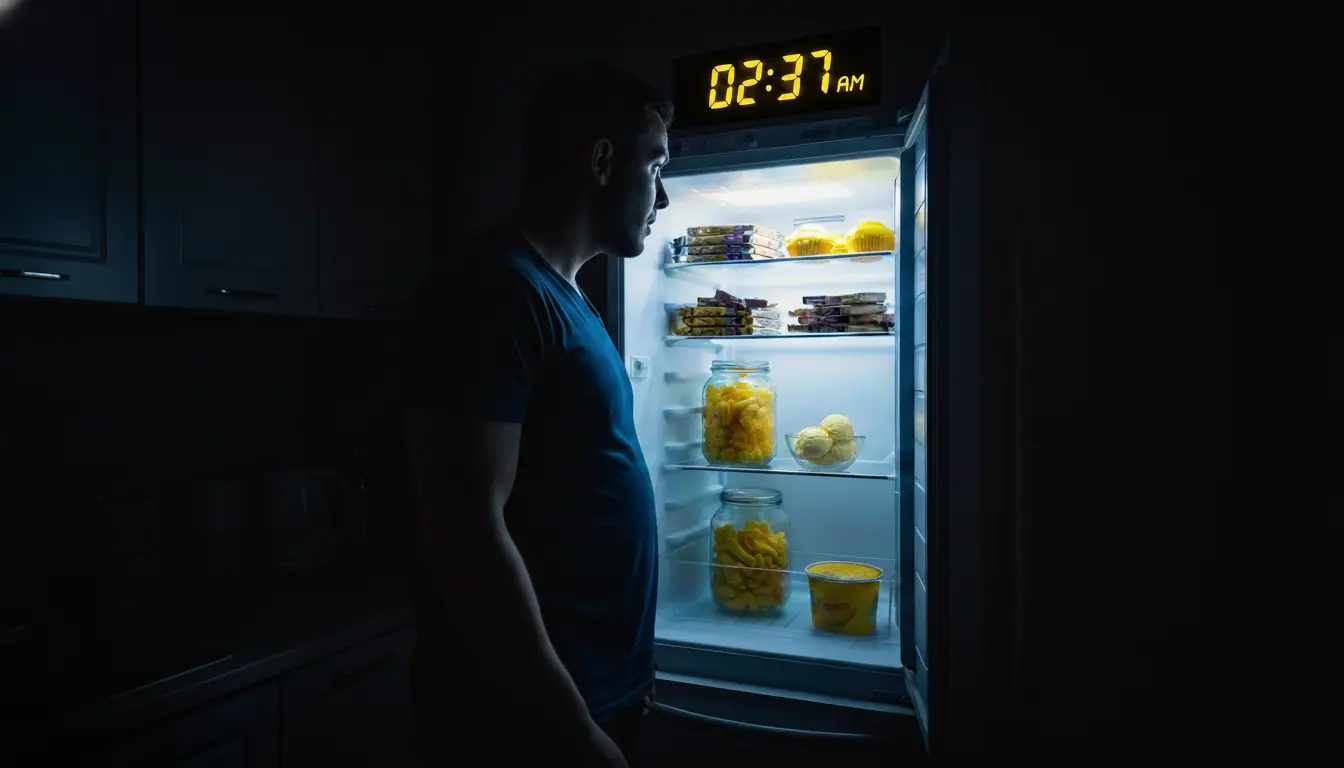
Cravings usually hit when you’re tired, stressed, or haven’t eaten in a while. In that moment, your brain isn’t asking for food — it’s asking for relief. And sugar delivers that, quickly and reliably. Until it passes. And until it asks for more.
How to Break the Cycle
The solution isn’t banning sweets. Banning them amplifies cravings. The solution is making sure your body gets enough real food — protein, healthy fats, and complex carbohydrates — so that sweets are no longer needed as an emergency reward.
Concrete steps that actually work:
- Never go longer than 4–5 hours without eating
- Include protein in every meal — it keeps you full longer and reduces cravings
- Remove sweets from your environment — from your home, car, office drawer. If it’s not there, you can’t eat it. Your environment is stronger than your willpower
- Don’t ban sweets completely — occasional indulgence is normal and won’t sabotage your results
- Get enough sleep — sleep deprivation directly increases sugar cravings because your body looks for energy from other sources
The Bottom Line
Sugar cravings aren’t your enemy. They’re a signal from your body that you can learn to understand and control — without starvation and without extreme measures.
Once you understand why it happens, it becomes much easier to stop. Not through willpower — but through a system.
If you need help building a nutrition plan that works for you long-term, reach out here.
Author: Momir Bogdanović — Online Fitness Coach