You’ve probably heard it a hundred times — eat more protein. Your gym buddy slams a shake after every workout. Everyone on Instagram talks about hitting their “protein intake.” And you’re sitting there wondering — how much do I actually need, and can I get it from real food?
The answer is yes. And in this post, I’ll walk you through everything you need to know — no complicated formulas, no expensive supplements, and no turning your life into a macronutrient obsession.
Why Protein Matters More Than You Think
Protein is your body’s building material. Every muscle, every organ, your skin, nails, hair — all of it is built from protein. When you train, you create tiny micro-tears in your muscle fibers. Protein is what repairs those tears and makes the muscle stronger and bigger.
But protein does a lot more than that:
- It keeps you fuller for longer than carbs or fats
- It helps your body burn fat instead of muscle when you’re in a caloric deficit
- It stabilizes blood sugar and reduces cravings
- It supports your immune system and hormones
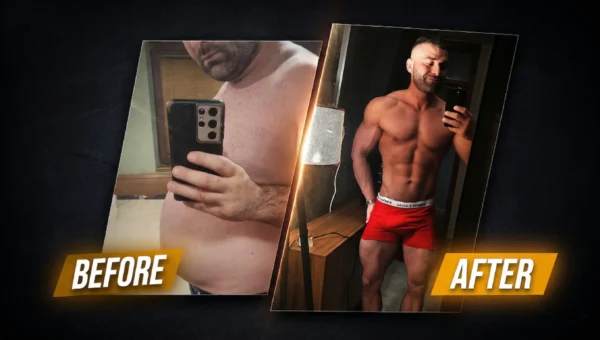
Bottom line — if there’s one nutrient that can make the difference between success and failure in your transformation, it’s protein.
How Much Protein Do You Actually Need
This confuses people because there are dozens of different recommendations out there. Let’s simplify it.
The basic recommendation for adults who don’t exercise is around 0.8 grams of protein per kilogram of body weight. For an 80 kg person, that’s 64 grams a day — relatively low and easy to hit with a normal diet.
If you train and want to build muscle or lose fat, that’s not enough. Research consistently shows the optimal intake is between 1.6 and 2.2 grams per kilogram of body weight.
For an 80 kg person, that means between 128 and 176 grams of protein per day.
If you’re over 35, aim for the higher end of that range. As we age, the body becomes less efficient at using dietary protein — a phenomenon scientists call “anabolic resistance.” Simply put: you need more protein to get the same effect you would have gotten at 25.
The practical rule I use with my clients: take your body weight in kilograms — that’s your minimum daily protein target in grams. Weigh 90 kg — aim for at least 90 grams, ideally 150+.
Where to Find Protein Without Supplements
Although whey is an excellent source of high-quality protein with a complete amino acid profile, whole food brings something powder can’t — vitamins, minerals, fiber, and other nutrients that work together for your overall health.
Animal Sources — The Most Efficient
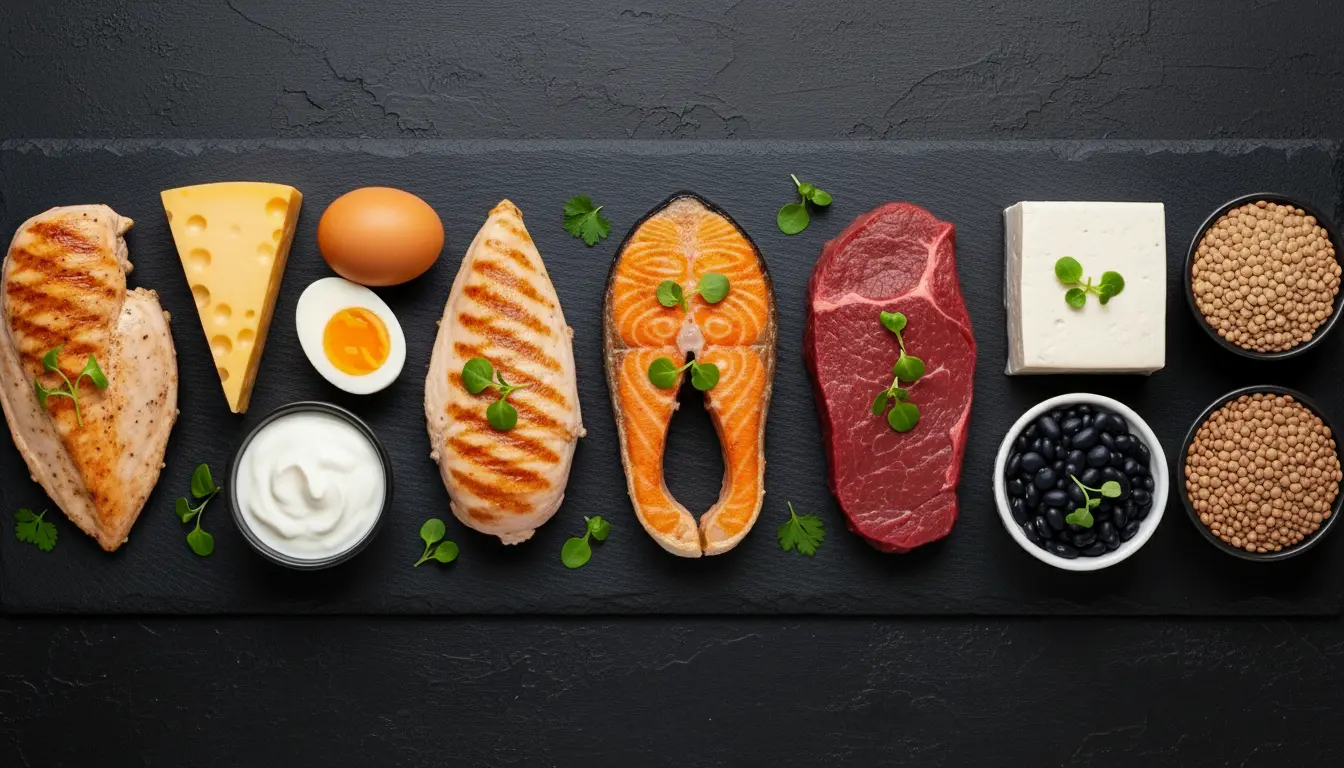
Chicken and turkey are probably the kings of protein sources for one simple reason — high protein content, relatively low cost, easy to prepare.
- 100g raw chicken breast = around 25g of protein
- 100g raw turkey breast = around 25g of protein
Eggs are one of the most nutritionally complete foods in existence. One whole raw egg gives you around 5g of protein, and the yolk contains important vitamins and healthy fats — don’t throw it away.
Beef and pork — steaks, ground meat, tenderloin. 100g of raw beef gives you around 20-25g of protein. Fattier cuts have slightly less protein but are still a great source.
Fish and seafood are especially valuable because alongside protein, you’re also getting omega-3 fatty acids.
- 100g raw tuna = around 25g of protein
- 100g raw salmon = around 20g of protein
- 100g raw shrimp = around 20g of protein
Dairy — cottage cheese, Greek yogurt, and kefir are underrated protein sources.
- 100g cottage cheese = around 10-15g of protein
- 100g Greek yogurt = around 5-10g of protein
Plant Sources — Useful But Require Planning
Plant proteins are incomplete — they don’t have all essential amino acids in the ideal ratio. But by combining different sources throughout the day, you can easily compensate for that.
Legumes — beans, lentils, chickpeas, peas. 100g of raw beans gives around 5g of protein. They’re also rich in fiber which helps with satiety.
Tofu and tempeh — if you haven’t tried them, they’re worth it. 100g of tofu gives around 5g of protein, while tempeh offers around 20g.
Edamame — young soybeans, 100g gives around 10g of protein and makes a great quick snack.
Soy is the only plant source that contains all essential amino acids — making it equal to animal proteins. 100g of raw soy gives around 15g of protein. Use it as a side dish, in soups, or as a meat substitute.
What This Looks Like in Practice — A Sample Day
Let’s say you’re a man weighing 85 kg and your goal is 150g of protein per day. Here’s what one day of eating could look like:
Breakfast:
- 3 whole eggs + 3 egg whites → around 25g of protein
- 200g Greek yogurt → around 15g of protein
Lunch:
- 200g raw chicken breast → around 50g of protein
- Side of choice (rice, potato, vegetables)
Snack:
- 150g cottage cheese → around 20g of protein
Dinner:
- 150g raw salmon → around 30g of protein
- Salad or vegetables
Total: around 140g of protein — from completely normal food, without a single shake.
The Most Common Mistakes
Mistake 1: Only eating protein around workouts
Your body can’t use unlimited amounts of protein in one sitting. Research shows it’s optimal to spread your intake across 3-5 meals throughout the day, with 30-40g of protein per meal.
Mistake 2: Skipping breakfast
Many people either skip breakfast or eat something with almost no protein — white bread, crackers, fruit. A protein-rich breakfast sets the tone for the entire day, reduces hunger, and helps you hit your daily goal.
Mistake 3: Focusing only on meat
Variety is key. By combining meat, fish, dairy, eggs, and legumes, you get different amino acids and micronutrients your body needs.
Mistake 4: Not enough protein when losing weight
Paradoxically, when you’re in a caloric deficit, you need more protein — not less. High protein intake protects muscle from breaking down while you shed fat.
When Supplements Actually Make Sense
Protein powder isn’t necessary — but it can be practical. If you’re traveling, if you don’t have time to cook, if you’re struggling to hit your daily goal from food alone — a shake can fill the gap.
Whey protein has one more advantage — an excellent protein-to-calorie ratio. If you’re in a cutting or definition phase and need to hit high protein without too many calories, a shake with 30g of protein at just 120-130 kcal is hard to match with whole food.
But it’s a tool, not the foundation of your diet. Call it what it is — a convenient addition, not a replacement for real food.
The Bottom Line
Protein is probably the most important nutrient for anyone who wants to change their body — whether that’s losing weight, building muscle, or simply feeling better. The good news is you don’t need to find it in expensive supplements.
Chicken breast, eggs, fish, cottage cheese, Greek yogurt — that’s your foundation. Spread it throughout the day, hit your target, and the results will follow.
If you need help putting together a nutrition plan that fits your life and goals, reach out here.
Author: Momir Bogdanović — Online Fitness Coach